Sustainability
Design for SafetyDesign for Safety
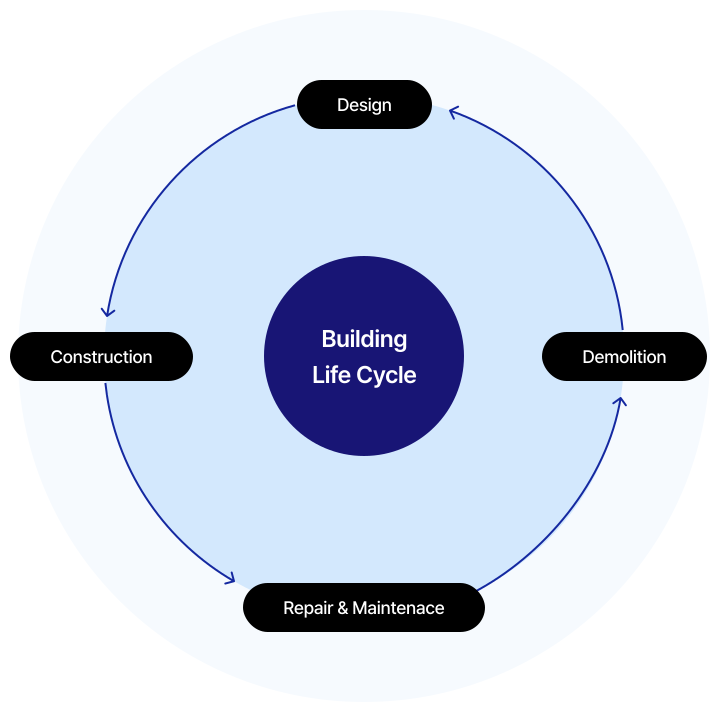
What is Design for Safety? It is "preventive safety management" that aims to eliminate or reduce risk factors across a building's full life cycle by integrating methods of risk analysis and risk assessment in the early stage of building design.
SAMOO has established a comprehensive design-for-safety management process and guidelines encompassing designers, contractors, users, and managers for preventive safety management, and has built a design-for-safety database spanning both the design and construction fields.
Through the sharing of specialized architectural design knowledge and information co-authored by SAMOO and Samsung C&T over years of joint research, we strive to practice social responsibility as a leading company in sustainability management and to help establish a safety-first culture in the domestic construction industry.
Download Materials
-
Design Safety Review Guide
Design Safety Review Guide
The Design Safety Review Guide provides preventive safety management guidelines to identify, eliminate, or reduce potential risks throughout a building's life cycle.
From the design stage onward, clients, design-for-safety experts, designers, and contractors work together to develop safer designs based on a risk database, helping protect both construction workers and building users. -
Design Safety Review Database
Design Safety Review Database
The Design Safety Review Database comprises a library and checklists developed based on risk factors identified in projects and on-site accident cases, as well as SAMOO's ISO 45001-certified occupational health and safety management system for design activities, supported by a design-for-safety training platform and internal expert committee activities.
SAMOO applies the database throughout the entire design process.
This material is provided for reference based on case studies, and should be applied in consultation with experts according to site-specific conditions.

Activities to Establish
a Reliable Foundation
for Design Safety
01
Building Expertise
Building a system based on accumulated experience
① Building the DfS Database: building a library, preparing checklists, and drafting guidelines and details
② Preparing exterior safety design guidelines
③ Exterior architectural design
02
Everyday DfS
Making safety design part of everyday practice through participation and encouragement
① Producing the DfS slogan
② Conducting regular DfS training
③ Reviewing/applying the DfS database for projects at each design stage
03
Internalizing Competitiveness
Continuous execution of safety design and expert development
① Establishing a plan for the continuous use/management of the safety design database
② ISO 45001 certification to secure international ESG competitiveness
③ Forming a safety design expert committee and developing experts